Wall Lamp or Table Lamp for a Quiet Corner?
Choose a wall lamp or table lamp for a quiet corner by weighing floor space, reading direction and furniture changes before you commit to a fitting.
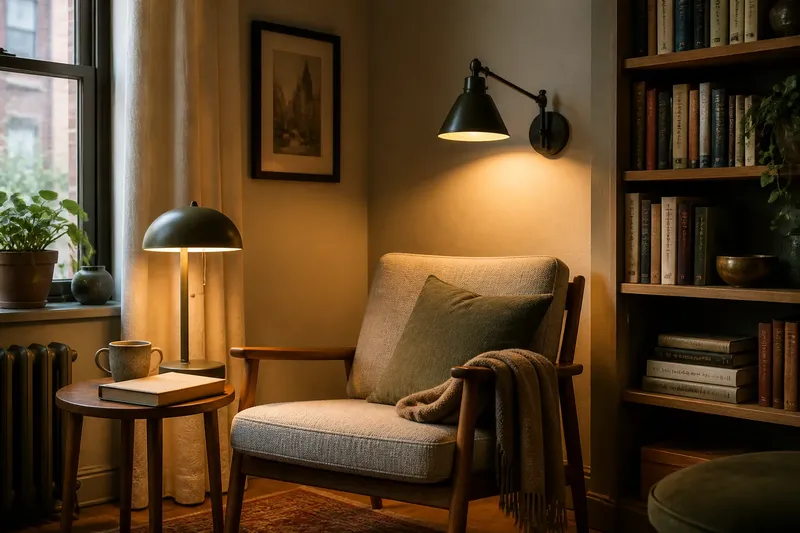
Wall lamp or table lamp for a quiet corner? Start by noticing what the corner needs you to do there: read, pause with a cup, or keep a clear patch of floor beside a narrow chair. The right lamp makes that activity feel natural without turning the corner into a display of lighting hardware.
What is the corner for?
Before comparing fittings, spend a little time using the corner as it is. Sit in the chair, reach for the book or mug you usually bring, and look at what already draws your eye: a window, a shelf, a view across the room or simply a blank wall.
A reading corner needs useful light near the page, while a spot for quiet conversation may benefit more from a gentle pool of light on the wall or table. If the corner has to serve both purposes, favour a lamp that can be adjusted or repositioned without making either task awkward.
Notice the chair’s position as well. A lamp chosen for a chair that is likely to move should not depend on a very precise alignment between its shade and the seat.
How much room can the lamp occupy?
A table lamp needs a stable surface: a side table, narrow console or shelf that can take its base without crowding the things you use there. Check that you can still set down a drink, reach a drawer and pass through the space comfortably.
A wall lamp frees that surface and keeps the floor clear, which can be valuable in a tight city room. It also creates a fixed point in the composition. The fitting stays where it is, even if the chair, table or artwork changes position.
Trace the lamp’s footprint before choosing. For a table lamp, place a book or folded sheet of paper on the proposed surface to represent its base and shade; for a wall lamp, mark a possible fitting position with removable tape. Sit down and check whether either one interrupts a route, a sightline or an easy reach.
Where should the light fall?
For reading, consider the light’s direction from the chair, not just the appearance of the fitting from across the room. A table lamp with a shade or adjustable arm can bring light close to a page, but its base and shade need room on the side table. A wall lamp can keep the table free, though a fixed fitting may be less forgiving if the chair shifts.
For a restful corner, the lamp need not shine straight at the seat. A wall fitting that sends light towards a pale wall can create a softer background glow, while a shaded table lamp can make a small, local pool around a book or cup. Think about glare from the chair: if the bulb is visible at your usual sitting angle, the fitting may feel more insistent than its size suggests.
Choose the lamp’s shape around the corner’s job. A swing arm can help when the same chair is used for different activities, while a closed shade can conceal the bulb and soften its presence. The bulb’s colour and brightness also affect the feel; follow the fitting’s stated compatibility and the manufacturer’s instructions.
Will the furniture stay put?
A table lamp is easy to move when a side table shifts, a chair turns towards the window or the corner takes on a new use. That flexibility is especially useful in a rented room or a space that changes with the seasons. Its trade-off is the surface it occupies and the need to keep the lamp’s lead unobtrusive.
A wall lamp rewards a settled arrangement. It can make a small corner feel less cluttered and leave a tabletop available for other things, but a changed layout may leave the light aimed at the wrong place. Think ahead to ordinary changes, not an imagined perfect room: does the chair sometimes slide aside, or does the table double as a work surface?
Say you have a narrow corner beside a bookcase, and the chair is regularly pulled out to make room for visitors. You could first try a compact table lamp on a movable side table; if the reading spot shifts, move both together and see whether the page remains comfortably lit. If the chair and table later settle into one position, a wall lamp may suit the corner better, provided its fixed light reaches the seat without glare.
What should you check before choosing?
- Surface space: Check whether a lamp base leaves room for the objects you actually use. If the table becomes cramped, consider a wall fitting.
- Reading position: Sit in the chair and look for glare or shadow on the page. If the light misses the reading area, favour an adjustable option.
- Furniture movement: Notice whether the chair or side table often changes position. If it does, a movable lamp is usually easier to adapt.
- Floor and passage: Check that a lamp, table and lead do not obstruct the route through the room. If they do, look for a more compact arrangement or a wall-mounted option.
- Wall suitability: Consider whether the wall can take the fitting and whether its position will still make sense after furniture changes. If either point is uncertain, keep the lamp movable.
- Everyday reach: Try the switch from the chair and check whether you can turn the lamp on without stretching. If not, choose a fitting or control you can reach naturally.
Which lamp suits each kind of corner?
A wall lamp often suits a narrow reading nook where a side table is too small, or a quiet seat that rarely moves. A table lamp usually makes more sense where the chair and furniture are rearranged, or where you want a softly lit object to anchor the corner.
For a corner with more than one role, avoid treating the choice as permanent. A table lamp can be a sensible first fit while you learn how you use the space; once the arrangement feels settled, you can decide whether a wall fitting would make the area easier to use.
What do readers often ask about corner lamps?
Is a wall lamp better for a small corner?
It can be, especially when the floor and side table are already crowded. Check that the fixed beam reaches the seat and that the fitting will not feel misplaced if the furniture moves.
Is a table lamp good for reading?
Yes, if its shade or adjustable arm directs light towards the page without exposing a glaring bulb. Make sure the base sits securely and does not take over the only useful surface.
Can a wall lamp work beside a chair that moves?
It can if the chair’s usual positions stay within the light’s useful reach. If the chair travels around the room, a portable table lamp is easier to reposition with it.
What if I cannot decide yet?
Try a table lamp first if you have a suitable surface and want to learn how the corner works in daily use. The effort of choosing elaborate decorative bulbs before settling the lamp’s position is not worthwhile; get the direction and comfort right first.
How do you make the final choice?
Choose a table lamp when flexibility matters more than saving surface space; choose a wall lamp when the arrangement is stable and a clear table or floor matters most. For a quiet corner, the useful question is not which fitting looks more finished, but which one leaves you able to settle in without adjusting the room around it.
Keep the decision tied to the corner’s real routine. A lamp that lights the page, stays out of the way and still makes sense after an ordinary furniture shift will serve the space better than a fitting chosen for an idealised layout.