A Shared Studio, Reset for a Late-Afternoon Gathering
Reset a shared studio for a late-afternoon gathering with a clear central route, flexible chair groups and a quiet edge that welcomes a little space.
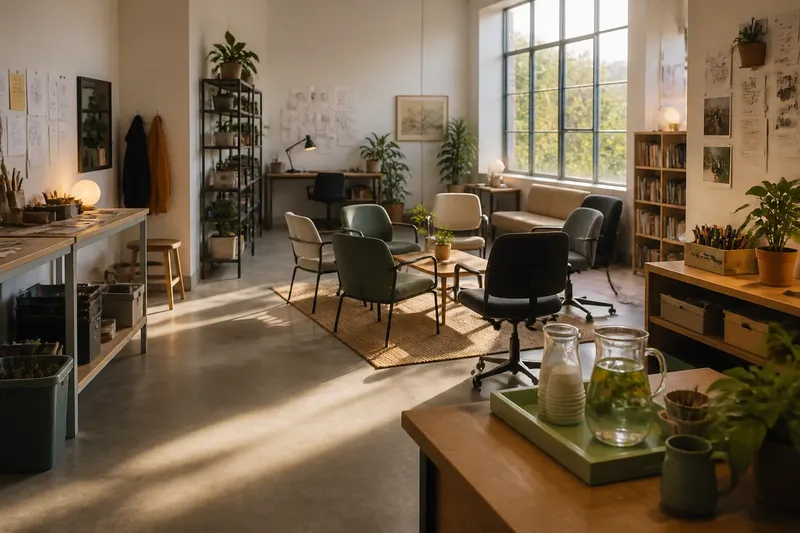
At half past four, a shared studio can still be full of open notebooks, charging leads and chairs pulled towards desks. To reset a shared studio for a late-afternoon gathering, start with one decision: which parts of the room should feel sociable, and which should stay easy to pass through or sit apart from?
The answer need not involve moving everything. A good change of mode is a short sequence of visible choices: clear the central route, draw movable chairs into a few loose groups, give each surface a job, and preserve a quieter edge. The room becomes legible without pretending it has stopped being a workplace.
What should change first in a shared studio?
Work mode tends to scatter attention across separate points: a laptop here, a sketch pinned there, a cup near the printer. Gathering mode asks people to read the room quickly. They should be able to see where to move, where to pause and where they can join a conversation without having to ask for permission.
That does not mean wiping away every sign of work. A stack of drawing pads or a wall of project notes may be part of the room’s character, and moving it can create unnecessary effort. Instead, distinguish between things that obstruct a shared activity and things that can remain as useful background.
Before shifting furniture, take a quiet look from the entrance and from the far side of the room. Notice where chair backs narrow the passage, where people might bunch up to greet one another and which work areas need to remain usable. This glance helps you make a few purposeful changes rather than rearranging the whole studio on instinct.
How should you clear the central route?
Make the path through the room the first physical priority. Move stray stools, bags and boxes out of the obvious line between the entrance and the main gathering area, while keeping access to desks, shelves and shared equipment practical. A clear route helps late arrivals find their way in and lets someone step away without threading between conversations.
Think of the route as a shape, not just a strip of empty floor. It should connect places people are likely to use: the door, the refreshments, the main chair groups and any facilities that must stay accessible. Avoid turning a necessary passage into a storage point simply because it looks spare.
Say you are preparing a narrow studio where the coat hooks sit beside a workbench and the gathering will happen near a window. You move a loose crate from the passage to a suitable storage spot, then shift one chair group away from the workbench; the expected result is a more readable way through, with the bench still reachable and the window area open for conversation.
Do not chase a perfectly empty floor. That can mean moving useful furniture twice or pushing belongings into a corner where they become harder to retrieve. Clear the route people need, and leave the rest of the room’s working logic intact.
How can movable chairs make a welcoming group?
Once the path is clear, bring chairs into small, loose groups rather than a tight ring or a formal row. Angle them so people can speak to one another while keeping a few easy gaps for someone to join. The arrangement should suggest a conversation, not require an introduction before anyone can sit down.
Use the chairs already available, including lightweight task chairs if they are comfortable away from a desk. Keep heavier or awkward pieces where they are unless they genuinely serve the gathering. If chairs have casters, park them on a stable surface and avoid placing them where they can drift into the route.
Leave some choice in how close people sit. A pair of seats slightly apart from the main group can suit a quiet chat, while a more open cluster gives a larger conversation room to form. The point is not to prescribe the evening’s social pattern; it is to give people more than one way to take part.
Check the grouping from standing height as well as from a seat. A tall shelf or a monitor may block sightlines between chairs, while a table placed squarely in the middle can make the group feel like a meeting. Small adjustments to angles often do more than adding another piece of furniture.
What should each surface be for?
A shared studio’s surfaces can quickly become a jumble of work materials and gathering items. Give each available surface a clear purpose: one table for cups, one shelf or tray for materials that should stay in use, and a small landing place for belongings if the room has one. When each area has a job, people can act without asking where every item belongs.
Keep refreshments away from paper, tools and equipment that should not be exposed to spills. A tray can gather cups and napkins in one place; a shallow box can contain markers or small supplies that need to remain at hand. Choose containers that fit the room’s existing furniture rather than turning a worktop into a display.
Do not cover every available surface just to make the gathering look prepared. An empty patch of tabletop can be more useful than an arrangement of decorative objects: someone may need somewhere to set down a notebook or a drink. The least useful effort is styling a surface so carefully that people feel reluctant to use it.
Why keep a quiet edge?
Not everyone wants to sit in the centre of a conversation, and some people may need to finish a task, listen for a while or take a short pause. Preserve a calmer edge of the studio with a seat or two, a clear approach and enough separation from the busiest cluster to make it feel like a real option.
This edge need not become a special retreat with new furniture. It might be an existing bench beside a wall, a chair near a bookcase or a desk that remains available for quiet work. What matters is that the space is not treated as overflow storage or blocked by the backs of the main group’s chairs.
Keep the quieter place connected to the room rather than tucked behind a screen or door. A person should be able to see the gathering and rejoin it easily, while choosing not to be in its centre. That small distinction helps a shared room feel accommodating without dividing people into separate zones.
What should you check before people arrive?
Give the room a final walk-through from the perspective of someone who has just come in. Look for the route, the available seats and the places where belongings or refreshments can go. Then sit in one of the quieter seats and check whether it feels like an option rather than a forgotten corner.
- Check that the entrance-to-gathering route is unobstructed; move loose furniture or stored items that narrow it.
- Check that chairs face one another without forming a closed ring; open a gap if joining feels awkward.
- Check that work equipment people still need remains reachable; shift the gathering rather than blocking access.
- Check that refreshments have a defined surface away from papers and tools; use a tray or another suitable container.
- Check that the quiet edge has a usable seat and clear approach; remove anything that turns it into storage.
- Check that bags and coats have a sensible place; avoid leaving them in the route or on seats intended for guests.
For furniture, equipment or shared belongings with specific handling requirements, follow the relevant labels and the owner’s instructions. Otherwise, keep the reset to ordinary, reversible moves that suit the room and the people using it.
How do you reset a shared studio without making it feel staged?
Keep a little evidence of the studio’s everyday work in view. A pinboard, a model on a shelf or the usual desk lamps can make the gathering feel rooted in the room, rather than staged in a blank space. The choice is about keeping what contributes to the room’s character without letting work clutter spill into the gathering route.
After the gathering, return shared chairs and materials to places people can recognise, and leave the room ready for its next use. You do not need to restore every object to a rigid position. A room that can shift back easily is more useful than one whose gathering setup looks polished but creates a new obstacle for the next person.
A thoughtful late-afternoon reset is a matter of emphasis: open a clear route, make conversation easy to enter, give surfaces useful jobs and leave room for someone to prefer a little distance. When those choices are visible, the studio can host a gathering while still feeling like a place people share and work in.